Gallery

Saturday, January 1, 2011

Classic Muscle Cars Review & Pictures

Classic Muscle Car

Muscle Cars & Classic Cars Reborn

These are exciting days and times for car enthusiasts. Muscle cars and classic cars have been brought out of the non-existent museum of retired classic cars & muscle cars and they have been reborn and given new life. 

Classic Muscle Car

Vrooom!!                                               

The muscle car is something that is as All-American as All-American gets. These cars hearken back to another era; an era in which Detroit dominated the world auto industry with innovation, style, gusto and raw power. U.S. cars were the envy of the world. Now those mu
muscle cars classic cars reborn
scle cars and classic cars have been given new life. Let’s talk about these cars.
Chevy Camaro. In the house. Can I get a witness? Can I get a woot-woot??!!
As much a star of the blockbuster “Transformer” movie as Megan Fox, this car is smokin hot. Red hot. Even white hot. If looks could kill – our city streets would be a crime scene, because this car has deadly hot looks.
The new model is available in a 2010 Transformers Special Edition which features the word “Transformers” emblazoned.,
on the hood, as well as strategic silver “Transformer” logos in certain key area (sort of a head logo of one of the Transformers).
More info about the all-new 2010 Chevy Camaro and Chevy Camaro Transformers Special Edition can be found at the link below.
Ford Motor Company has also been busy as of late.
How the Capri made it into “classic car” status is unknown, we surely though could call the Capri retired. It has now been reborn and with fabulous new styling. And what a car it is. 
The Capri was originally built in Europe and sold in the U.S. This car was sold simply under the name “Capri” and later “Mercury Capri”. The new Ford Capri will have the latest in Ford’s European styling. And this car is now a sports car(!)
                                   SEE Classic Muscle Cars Pictures
Classic Muscle Car
Classic Muscle Car
Classic Muscle Car
Classic Muscle Car
Classic Muscle Car
                                         Classic Muscle Car Road Test 

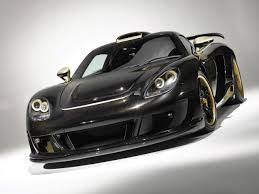
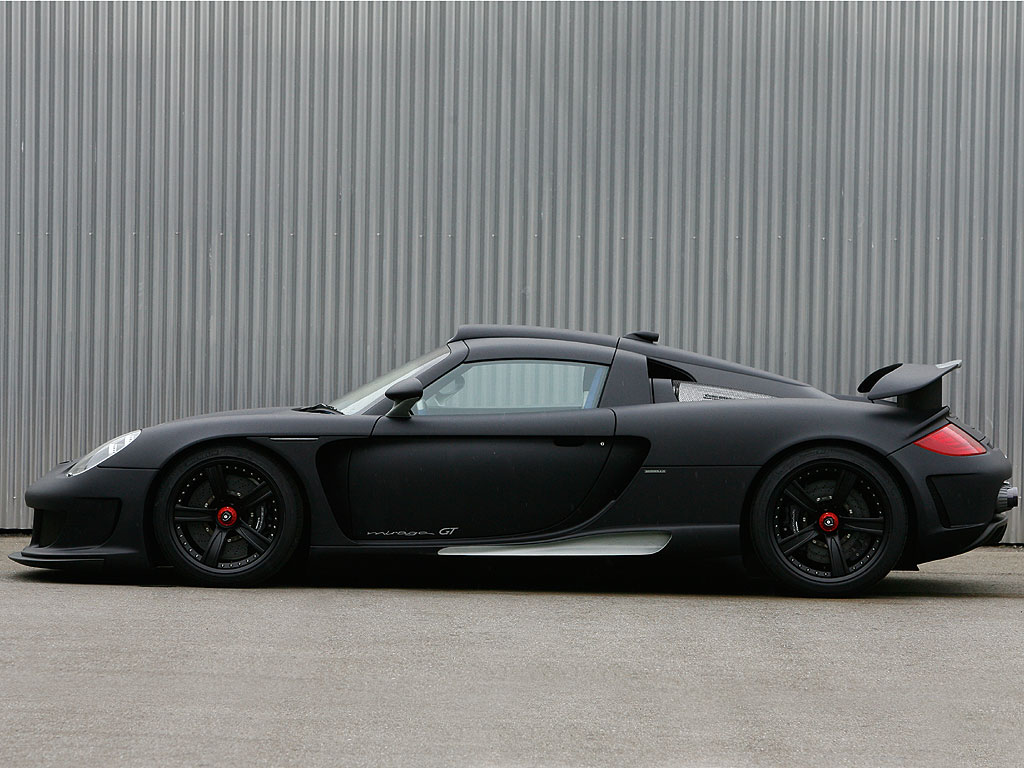
Gemballa Mirage GT Black Cars

Gemballa Mirage GT Black
This is the latest Mirage GT to come out of Porsche tuner, Gemballa’s garage. The Carrera GT may well have ceased production on May 6, 2006 but Gemballa are still finding enough interest in their Mirage kits to create a new one every now and again.

This Mirage GT is similar to the carbon edition we showed you last month. It’s got 650bhp and is capable of 0-100kph (62mph) in 3.7 seconds, 0.2 seconds faster than the standard car. 0-200 kph is also dealt with in 0.2 seconds less, 9.7 seconds in total. It tops out at 335 kph (208mph).
The exterior looks stunning as always with Mirage GT’s. The mix of matte black paintwork and silver accents really make the car stand out. The interior is less of a success though.
As with most tuners, Gemballa have added a garish ‘one-off’ theme to the car. A mixture of black material, blue alcantara and a space age-looking silver material give it a strange new look that’s definitely an acquired taste! As you’d also expect, there’s plenty of carbon fibre in this car.
Gemballa Mirage GT Black
                                                                          

2010 Range Rover Wallpaperts, Review & Specifications

2010 Range Rover
Last year, Land Rover unveiled the LR3 (Discovery 3, in Euro-speak), a midsize luxury 4x4 SUV that marked the company's first all-new offering as a member of the Ford stable. Based on a two-piece hydroformed chassis code-named T5, the LR3 boasted such new developments as four-wheel independent air suspension and a dial-actuated "Terrain Response" four-wheel-drive system, that allows the driver to literally tune the vehicle's performance parameters to best suit the terrain at hand.
This year, Land Rover returns with two more entries. One vehicle, already safely ensconced in the pantheon of 4x4 legend, sports enhanced levels of performance and refinement; while the other, brand new for '06 and based on the T5 chassis, takes the Land Rover brand in a radically new direction-the rarified high-performance sport/touring segment previously thought the province of SUVs from Mercedes, BMW, and Porsche.
All new for 2006, the Range Rover Sport could just as easily be called the Rover GT, as it's built with the "Grand Touring" concept in mind: smaller, lower, cozier inside, and sportier on pavement than the Range Rover. Five inches shorter in wheelbase (via a chopped frame), 7 inches shorter in length, and 2 inches lower in ground clearance, with 40-series radials on 20-inch rims (get over it already!), the Rover Sport aims to expand Land Rover's presence in the luxury SUV segment. And while the Sport may have the looks of an AWD sport-tourer, it has all the four-wheeling hardware found on the Range Rover-and quite a bit more.
A peak at the body specs alone provides a hint of the degree of technology that went into the Rover Sport's development: Aluminum bonnet and tailgate, zinc-coated steel doors, new die-cast magnesium crossbeams and magnesium alloy front body panels for reduced weight and better crash protection, and brand-new body dampers which supplement the factory body mounts and bushings to reduce on-road vibrations at lower speeds.
Or consider the all-new Dynamic Control system, a mind-boggling ride and handling assist that employs sensors in the A-pillar and steering-to gauge levels of body roll and steering input under throttle-to engage pump-driven front and rear antisway bars (via an internal motor in each sway bar) to compensate for excess body lean. Additionally, the system shuts off automatically in low-range-unless, of course, it senses the vehicle tottering precariously on a sidehill. Simply put, the Rover Sport is the most technologically advanced vehicle Land Rover has built to date.
The Rover Sport utilizes the same power- and drivetrain as the Range Rover, with both naturally aspirated and supercharged versions of the 4.4/4.2 V-8, slightly de-tuned for the RS application, with the ZF six-speed transmission and two-speed transfer case with 2.93:1 low-range. Height-adjustable, wishbone-located air springs-with graphite knuckles and re-engineered bushings-are at all four corners, with locking center and rear differentials monitoring wheelspin and torque transfer. The Rover Sport comes with premium tires: HSE versions get 255/50R19 Dunlop Grandtreks on 19x9-inch rims; Sport SCs get 20s and 275/40R20 Michelin M + S Synchrones. The tires are V-rated-a good thing, as the Rover Sport's top speed is a governed 140 mph.
Because it squats lower to the ground and has a poorer ramp breakover angle than the Range Rover, it is a good thing that the Sport version is additionally equipped with the Terrain Response System, which debuted last year on the LR3. The system, which is activated by a dial on the center console, essentially reprograms the vehicle's ECU on the fly to re-adjust a slew of vehicular functions to best suit the demands of diverse terrains: mud, ice, snow, rock, sand, and pavement. With a flip of a dial, throttle tip-in, transmission shift points, suspension movement, torque bias and hundreds of other functions are electronically recalibrated to provide optimal performance on whatever surface the vehicle happens to be driving on.
On highway, the supercharged Rover Sport provides an outstanding ride-quick and nimble, crisp and precise, unmistakably carlike. Our test unit showed excellent lateral stability when pitched into high-speed turns, and brake feel in particular was exceptional-no grabs or twitches, with progressive, predictable response to pedal input. Caught in a nasty snowstorm on a high mountain two-lane, we piloted the Sport in 1st gear for about half an hour-downhill all the way, 12 miles' worth-with no rear-wheel slippage, loss of handling, or need to ride on the brakes-we didn't use the brakes at all, in fact. The Sport's racing-style bucket seats are smaller and narrower than the seats in the Range Rover; they envelop the driver's body with form-fitting leather side bolsters, providing outstanding support and bestowing a sportier feeling to the Sport's interior.
Off-pavement ... well, we were a bit worried about those 40-series tires and quasi-dub rims, but our fears turned out to be unfounded. Our testing this time took us through rain-soaked gulleys, muddy trails, and even a Mini-Rubicon-style rockcrawling course. As with the Range Rover, the Rover Sport relies on its locking diffs and electronic traction controls to keep the vehicle moving, and they worked flawlessly in mud and on rocks. The "Rocks" setting on the Terrain Response dial radically remaps the Sport's throttle and gearing algorithms-you can rev the V-8 up to nearly two grand in 1st gear, and still keep vehicle speed at near-idle levels in low-range. (A couple of vehicles in our test group suffered sidewall punctures-tough to do, we reckoned, as there's not much sidewall to mess with-but this happened not on the rocks but in a rainy sluice littered with sharp stones and tree branches. Other, more "trailable" tires would likely have suffered the same fate at the street pressures we were running.)
Comparing these vehicles is a little like apples and apples-similar in DNA and design, but divergent enough in taste to appeal to many palates.
For traditionalists, the new Range Rover offers all the creature comforts and off-pavement prowess the vehicle is known for, as well as a level of street performance previously unfamiliar to the marque. It also comes with a premium price tag: nearly $75,000 for the base-model HSE. It's rather a bit rich for our blood, but we suspect that for the typical Range Rover buyer, this would be of secondary concern.
The Rover Sport, however, ups the ante in the upscale sport-touring segment considerably, with Teutonic-level ride and handling characteristics on pavement, all the green-lane aptitude of the LR3, and a price that makes it an instant competitor: As one media wag put it, "For $60K and change, who would buy an X5 anymore?" Not the most tactful comparo, perhaps, but one we'd imagine would leave some Land Rover aficionados-and perhaps a few LR execs, in private-licking their chops with malicious glee. We'll have both vehicles in hand for our 2006 Four Wheeler of the Year test, coming in our February 2006 issue. They both figure to be serious playas-stay tuned for all the results.
Technical Specifications:
Vehicle: 2006 Range Rover Sport HSE/SC
Base price: $56,750/$69,750
Engine: Aluminum 90-degree AJ V-8Displacement (liters) 4.4/4.2
Bore x stroke (in.): 3.47 x 3.56/3.39 x 3.56
Aspiration: Twin-impeller Eaton supercharger
Valvetrain: DOHC 4 valves/cyl.
Max hp @ rpm: 300 @ 5,500/390 @ 5,750
Max torque (lb-ft) @ rpm: 315 @ 4,000/410 @ 3,500
Transmission: Six-speed automatic
Ratios (:1)
1st: 4.17
2nd: 2.34
3rd: 1.52
4th: 1.14
5th: 0.87
6th: 0.69
Rev: 3.40
Transfer case: Full-time two-speed
Low range ratio (:1): 2.93
Axle ratio (:1): 3.73/3.54
Crawl ratio (:1): 45.57/43.25
Suspension: Four-wheel independent; double wishbones, adjustable air springs
Differentials: Locking center; locking rear
Steering: ZF Servotronic rack and pinion
Brakes, f/r: HSE: 13.5-in./13.9-in. Bosch four-channel,
SC: 14.2-in. Brembo/13.9-in. Bosch four-channel
Wheels/Tyres: HSE: 19x9 alloy/255/50R19, SC: 20x9.5 alloy/275/40R20
Wheelbase (in.): 108.0
Length (in.): 188.5
Width (in.): 75.9
Max height (in.): 69.6
Base curb weight (lb.): 5,468-5,670
Max ground clearance (in.): 8.9
Max approach/departure angles (deg.): 34/27
Max breakover angle (deg.): 25
Max towing capacity (lb.): 7,716
Interior cargo capacity (cu. ft.): 71.0
Fuel capacity (gal.): 23.3
EPA mileage estimates, combined (mpg): 18.5/17.5
Seating capacity, persons: 5
2010 Range Rover
2010 Range Rover
2010 Range Rover

Friday, December 31, 2010

Spyker C8 Laviolette Car Pictures, Review ,Specifications & Wallpapers

The Spyker C8 Laviolette can be regarded as one of the most beautifully designed supercars. This exotic car is a combination of beautiful swooping curves, upswinging doors and stylish vents. The interiors of the car feature exquisite styling. Even though the Spyker cars are relatively new entrants in the exotic car market these cars are bound to create quite a stir wherever they are driven.


Spyker C8 Laviolette  Car
Spyker C8 Laviolette Specifications
The Spyker cars feature audi engine and the Sprker C8 Laviolette review reflects the same. The car has an Audi 4.2L V8 engine that can generate power of 400 bhp at 7500 rpm along with peak torque of 480 Nm at 7500 rpm. The length of the car is 4185 mm and its width is 1880 mm while its height is 1245 mm.
The car can accommodate 2 persons and the engine comes with 6-speed manual transmission feature. Like other Spyker cars this one is muscular and has a beautiful aggressive design. The chassis as per the Spyker C8 Laviolette review is made from aluminium and the car also has completely adjustable front as well as rear suspension.
The car also has tremendous stopping power due to its AP brakes that come with 6-pot callipers. The kerb weight of the car is 1275 kgs and the car also has fuel tank capacity of 75 litres. The car has top speed of 300 km/hr. The car can be started by flicking the red cover off a switch and pressing it. After this the start button can be pressed to bring this car to life.
The car has a hard ride quality but is exceptionally well balanced. The steering also has a precise feel to it. The car also offers exceptional cornering and on the whole it ensures the driver can enjoy an intimate driving experience.
Spyker C8 Laviolette Mileage
The car can deliver mileage of around 8 km/litre
Spyker C8 Laviolette Interiors
The interiors of the car are beautifully designed and feature generous use of Alcantara leather. The interiors have beautiful orange contrast stitching. The instrument panel in the car has turned aluminium and prospective buyers can also opt for Chronoswiss switches and dials. The car also has roof upholstery designed in black alcantara and fire protection floor mats.
Spyker C8 Laviolette Safety features
The safety features in the car include driver’s airbag, seat belts with 3 point restraining system, remote controlled central locking feature and alarm system that comes with immobiliser.
Spyker C8 Laviolette Price and design variations
The Spyker C8 Laviolette starting price is around Rs 2.4 crore and the car is available in two design variations which include Spyker C8 Laviolette LWB and Spyker C8 Laviolette SWB.
Spyker C8 Laviolette Colors  
The car is available in as many as 20 distinctive colors
Spyker C8 Laviolette  Car
  Spyker C8 Laviolette Test Drive Video